
Kilifi, Kenya: A day of listening to leaders, families, and health workers in the fight against malaria.
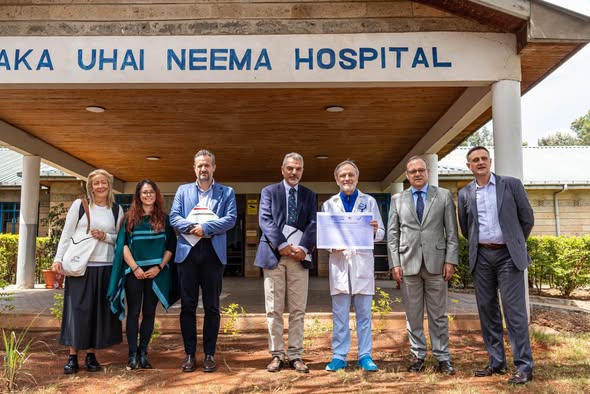
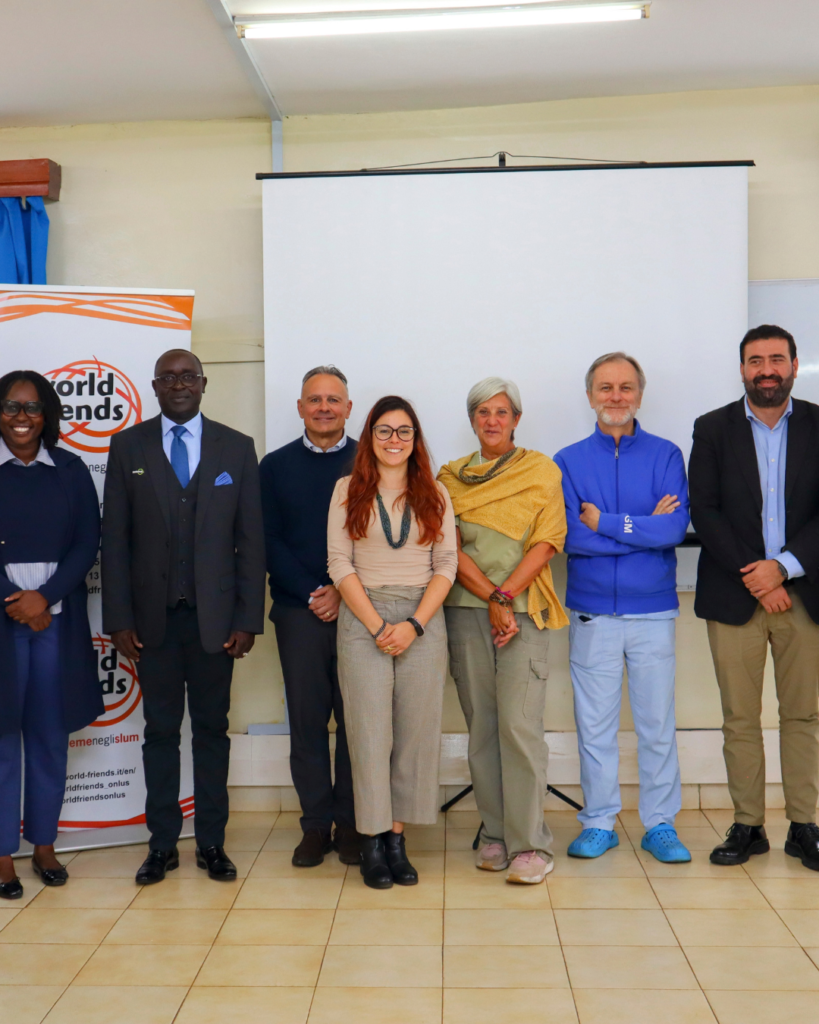
From October 16 to October 23 2026 The first mission of the took place in Kilifi CountyUSL Toscana Sud Est Company within the PIR – Community Based Malaria Programme, funded by The Tuscan Regional Authority through Global Health Center and created together with World Friends. Thursday 22 October the delegation and the World Friends team stopped at the dispensary and the Community Health Unit of Mwakuhenga: a day dedicated to listening to the community, visiting homes with Community Health Promoters, and strengthening the skills of local healthcare workers.
The project: malaria is fought in communities
In Kilifi County, malaria remains a major health threat, especially for isolated communities. Access to services is difficult, and diagnosis and treatment are often delayed. Community Based Malaria Programme (2026–2028) works in the sub-counties of Ganze, Kilifi North and Kilifi South to strengthen prevention, diagnosis, treatment and follow-up directly at the community level.
At the heart of the project are the Community Health Promoters (CHP). Right in Mwakuhenga, together with Pingilikani and Jaribuni, last summer they were 30 new CHPs formed, which have been added to the 100 of the already active network.
One week, three communities
The mission involved the communities of Jaribuni, Pingilikani and Mwakuhenga, working on three areas:
- Early diagnosis and treatment: support to CHPs, who perform rapid malaria tests and can administer treatment in cases of uncomplicated malaria;
- Strengthening skills: training of health center staff on fever management and recognizing danger signs;
- Monitoring and evaluation: review the data collection system and launch a qualitative study to measure the project's impact.
The Mwakuhenga stop offers a close-up look at how this work takes shape in community life.
Listening to community leaders
The day opened with a meeting with community leaders, welcomed by the local chief. The discussion was open and concreteThe leaders described how they experience malaria in their territory and indicated opportunities to strengthen the prevention work already underway:
- maintain regular health education sessions;
- extend outreach activities to the most remote and difficult to reach villages;
- involve young people more in the prevention of malaria.
The leaders also reported the chronic diseases as a further concern for the health of Mwakuhenga families.
House to house with Community Health Promoters
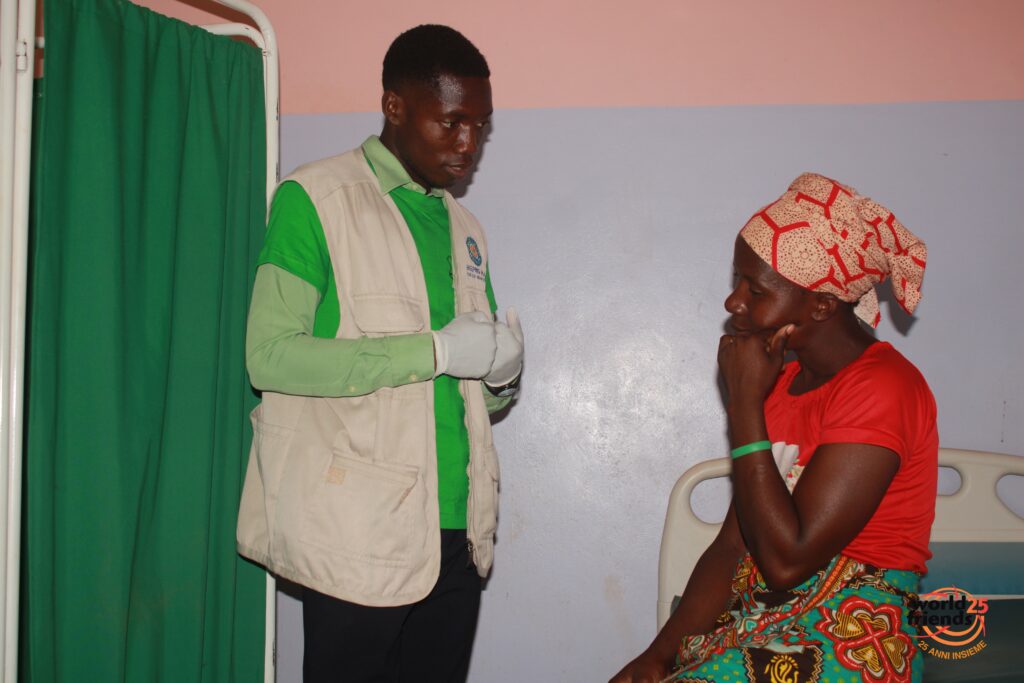
In the late morning the team walked through the Mwakuhenga Community Health Unit together with one of the CHPs formed by the project, visiting families in their homes. It was the CHP itself that led the health education sessions, sharing key messages for malaria prevention:
- clear the vegetation around the house;
- sleep every night under a treated mosquito net;
- cover or empty standing water;
- contact a healthcare facility immediately when fever appears;
- recognize the danger signs requiring urgent care.
The families, in turn, told what they see every day. With the short rains malaria cases are on the rise. damaged mosquito nets and outdoor evening activities, especially among young people, continue to expose families to risk. And there are still those who think that damaged mosquito nets can be reused for to fish or raise chickensThis is valuable information, which helps the project to make awareness-raising increasingly targeted.
Practical training on fever management
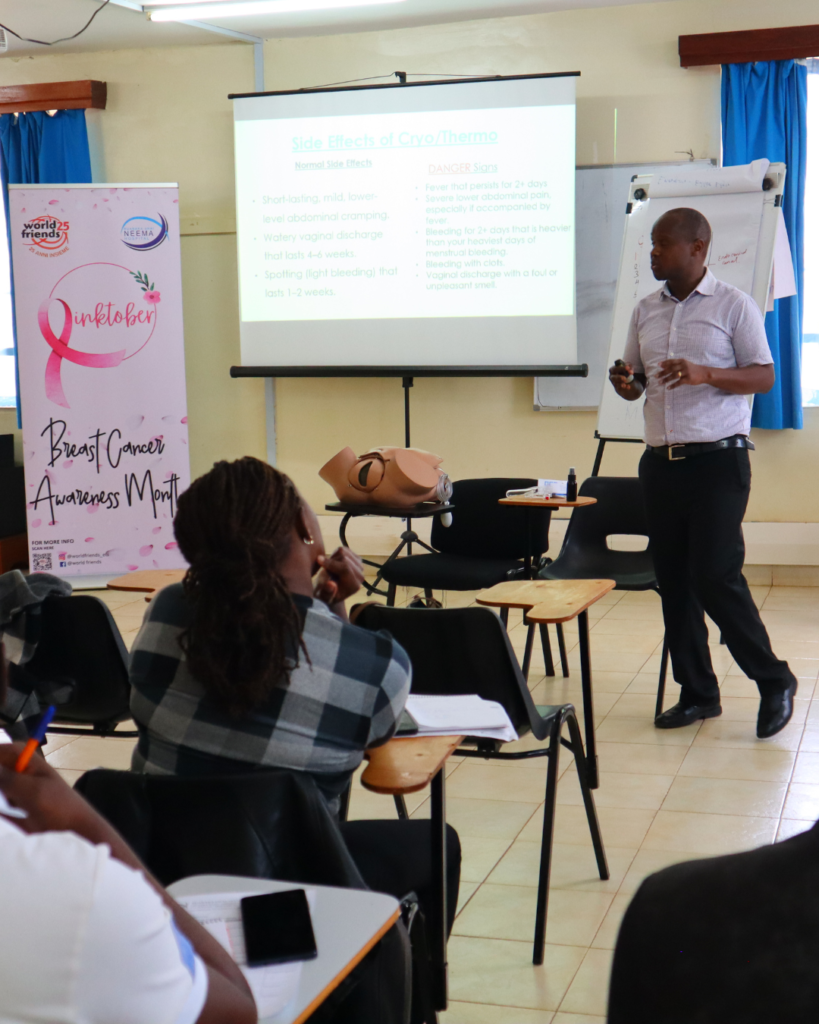
In the afternoon the delegation of the USL Toscana Sud Est Company held a short session of continuing medical education (CME) on managing fever and recognizing danger signs, such as anemia and seizuresIt was addressed to the dispensary nurse and to theCommunity Health Extension Worker (CHEW).
The approach was practical: before the main presentation, the participants discussed together some case studies, classifying them to decide when to treat on site and when send the patient to a health facilityThis is how we strengthen the skills of those who are the community's first point of contact every day.
Together, to reduce the burden of malaria
The visit to Mwakuhenga confirmed that the partnership, engaging community leaders and the work of the CHP can strengthen the project's impact. World Friends will continue to support community engagement, together with the Local Health Authority of Toscana Sud Est and the Kilifi County Health Department, to reduce the burden of malaria in Kilifi County.
Because the most effective solutions come from listening. And health is built where people live, door by door.

The project is funded by the Tuscany Region through the Global Health Center.