
No Mother Alone: A Community Health Promoter's Work for SonoMobile 2.0 in Nairobi's Slums
Among the alleys of MathareIn one of Nairobi's most densely populated informal settlements, the journey that takes a pregnant woman to the clinic is never just a matter of miles. It involves trust, information, and someone who knocks on the door and reminds her that the visit matters. For many expectant mothers, that someone has a name: Dennis Otieno, community health promoter (Community Health Promoter, CHP) of the project SonoMobile 2.0 by World Friends.
A bridge between the community and health facilities
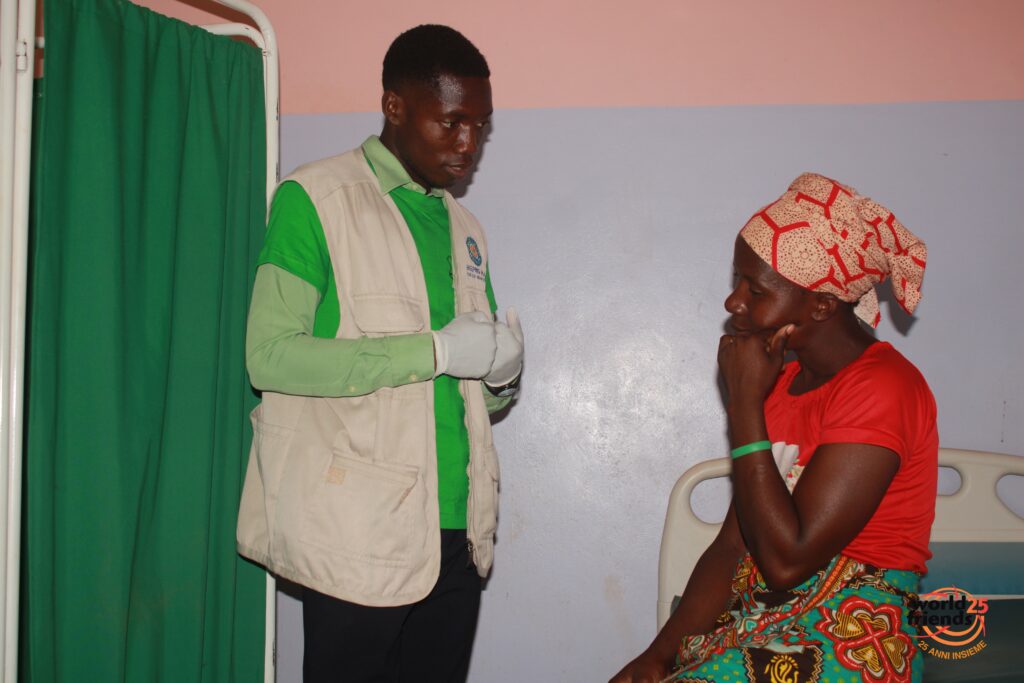
Dennis lives and works in the community he serves. His role is to direct connection between Mathare health facilities and pregnant women of the neighborhood: he meets them, listens to them, accompanies them to the services prenatal care (ANC – Antenatal Care) and encourages them not to miss any appointments.
It's a job that requires constant presence. Because in the slums, where distances are social rather than geographical, a regularly monitored pregnancy often depends on precisely this: having someone by your side who knows the way and who makes each expectant mother feel less alone on her journey.
Community health promoters are a pillar of the Kenyan health system and a valuable ally in many World Friends projects, from Community-based malaria management in Kilifi up to maternal health in Nairobi.
SonoMobile 2.0: Ultrasound where it's really needed
In Nairobi and Kajiado Counties, access to obstetric ultrasound remains a privilege. About the 73% of families of the area lives in poverty and in the Kasarani district almost half survive on less than $1,90 a dayA hospital ultrasound can cost more than a family's monthly income. Added to this is the shortage of sonographers and equipment in peripheral facilities.
For this reason World Friends, in partnership with the Ruaraka Uhai Neema Hospital, he started SonoMobile 2.0, which brings thePoint-Of-Care Mobile Ultrasound (POCUS) in Ruaraka Sub-County and Kajiado County. The project builds on the legacy of the first SonoMobile, born in 2019 in the slums of Nairobi, and works on three fronts:
- Training of nurses and midwives in the independent use of portable ultrasound.
- Mobile ultrasound services in health centers in the most underserved communities.
- Community awareness, to introduce women to prenatal care.
Technology alone isn't enough. For an ultrasound to be truly useful, women need to come to the clinic. This is where Dennis's work comes in.
Understanding ultrasound to choose it
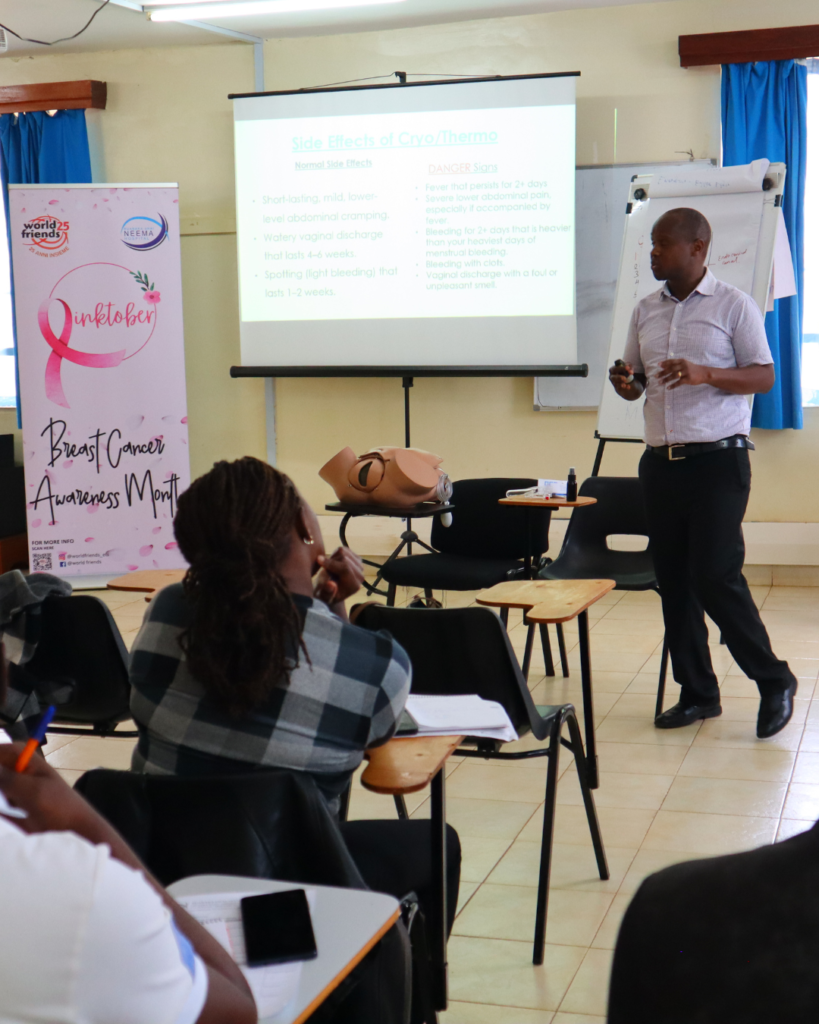
in ANC health education sessions Organized by SonoMobile 2.0, Dennis explains to young mothers-to-be what an ultrasound is really for. He explains how POCUS ultrasound allows accurately date the pregnancy and estimate the gestational age, and how each check allows to follow the baby's growth, heartbeat, position, and amount of amniotic fluid.
But there is one message that Dennis always comes back to: Ultrasound complements routine care, it does not replace it. For this reason, she encourages mothers to keep all scheduled clinical appointments, where they receive physical examinations, guidance from healthcare professionals, and the nutritional support they need. An image on the screen is a valuable step, but it's the entire process that protects mother and baby.
Everyday gestures and knowledge that save lives
Pregnancy care continues outside the clinic. Dennis guides mothers towards healthy everyday habits: a balanced diet, good hydration, regular intake of prescribed supplements and adequate rest.
Above all, Dennis teaches future mothers to recognize the danger signs in pregnancy, those who should never be underestimated. To each of them, she entrusts a simple message to take home and share with family and neighbors: If you see any of these signs, you should immediately contact a healthcare facility.Catching it early can make the difference between a manageable complication and an emergency.
A safe space to ask questions
Dennis' sessions are not lectures. Group discussions, illustrative scenarios and question and answer sessions They create a climate of trust where every woman can share her doubts and fears. It is in this space that the doubts and fears are dispelled. false local myths on pregnancy and ultrasound, and that individual concerns are finally being heard.
The fruits of this commitment are measured over time: more women attending clinics, complications identified earlier and a culture of prevention that takes root in the community. The end result is what matters most: safer births and better health for mothers and their babies.
A project selected from the SPRINT Call
SonoMobile 2.0 has been selected as part of the Call SPRINT sponsored by Innovation for Development, a program of Cariplo Foundation e Compagnia di San Paolo Foundation aimed at promoting innovation in the field of international development cooperation.
Because healing begins in the community
Dennis's story reminds us that innovation works when it connects with people. A portable ultrasound machine saves lives only if women know it exists, trust it, and choose to be examined. Community health advocates like him make this connection possible, every day, door to door.
Every informed mother is a mother who seeks help in time. Every well-attended visit means a safer pregnancy. Every healthy baby is a growing stronger community.
To learn more about the project: world-friends.it/kenya/progetti-in-kenya/sonomobile2-0